


AMIRI Autumn–Winter 2026: The Luxury of Living In


There was no sense of arrival at the AMIRI Autumn–Winter 2026 show. No dramatic threshold, no overt performance. Instead, guests seemed to enter a home. A lived-in one. The kind of space where music lingers in the walls and style is absorbed rather than announced. Furniture felt careworn, objects chosen rather than styled, the atmosphere closer to a Laurel Canyon den than a conventional runway set. AMIRI didn’t stage a fantasy; it opened a door.
This was the heart of the collection: intimacy over illusion. A reflection of Los Angeles not as a postcard, but as a personal geography, specifically Laurel Canyon, with its layered histories of cinematic glamour, counterculture, and music-led creativity. The 1970s hovered gently in the air, not as nostalgia, but as attitude. This was West Coast style translated for now: relaxed, expressive, deeply individual.

Mike Amiri’s vision for formalwear anchored the narrative. Tailoring arrived stripped of ceremony, worn the way artists have always worn it, instinctively. A blazer over a Henley. Boots instead of dress shoes. Pieces that felt personal, almost improvised, yet impeccably made. It wasn’t about dressing down; it was about bringing a sense of occasion into everyday life. Clothes that could exist on stage, then walk straight back into the real world without missing a beat.
Silhouettes moved fluidly between men's and women's wear, crossing wardrobes with ease. Boyfriend suits slipped naturally onto women; delicate embroidered knits travelled the opposite way. Gender was not a statement here, but a reality, one shaped by sharing, borrowing, and living together. The result was a wardrobe that felt honest, reflective of how people actually dress when style is an extension of self rather than performance.

Denim played a central role, as expected, but elevated through texture and detail. Jeans flocked with velvet introduced a tactile richness, while classic cuts remained grounded in American proportions. Western references, boots, officers’ jackets, and leather were refined through AMIRI’s particular savoir-faire, creating a dialogue between heritage and modern luxury. Each piece felt familiar, yet subtly transformed.
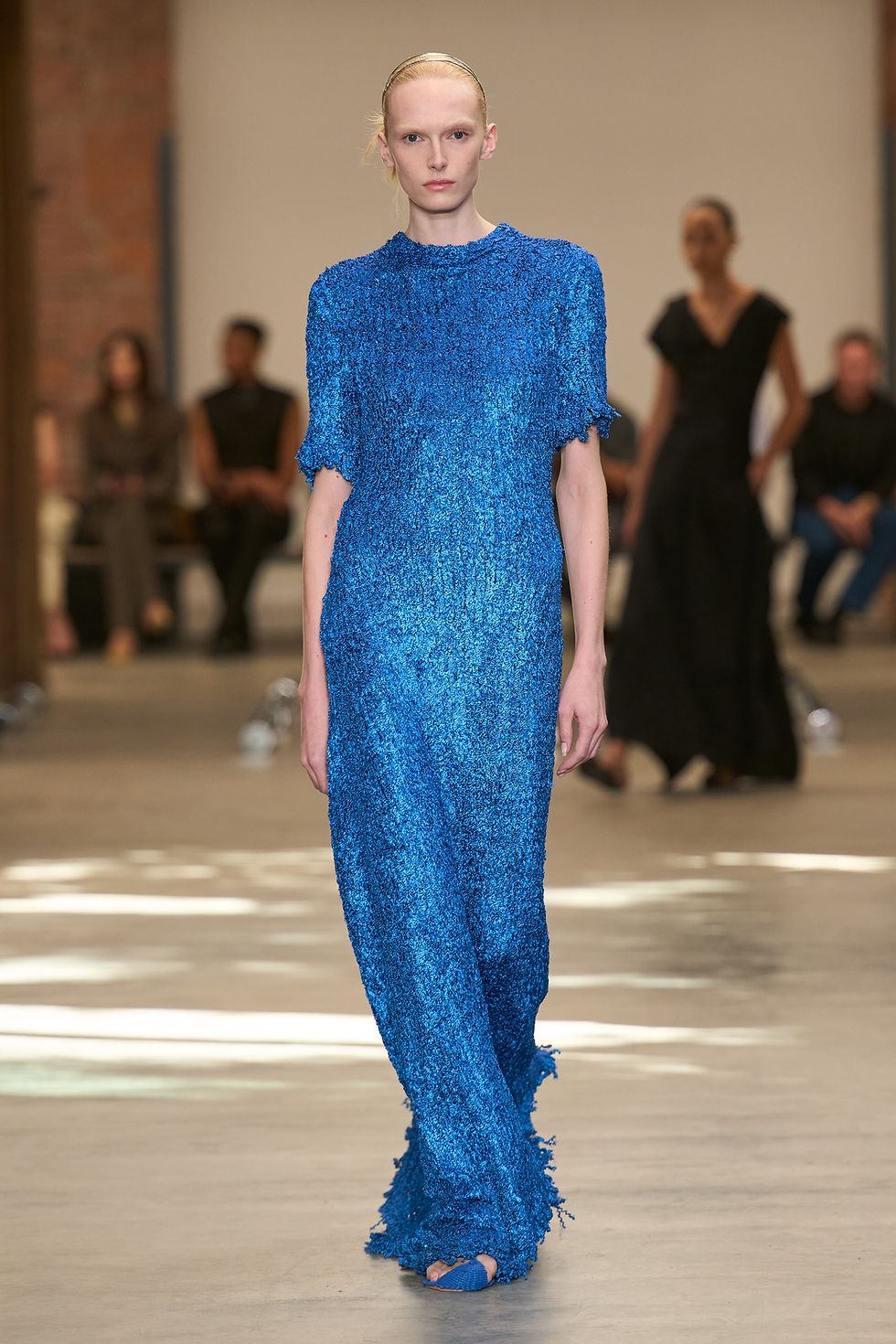
Colour carried its own emotional weight. Deep merlots and burgundies suggested late evenings and old vinyl sleeves; sage and mint greens softened tailoring; flashes of bright blue cut through with clarity. The palette was hazed with memory, but never sentimental. It felt lived-in, long-loved, an idea that echoed throughout the collection.

Decoration, when it appeared, acted as punctuation rather than excess. Embroideries were placed with intention, revealing themselves slowly. Seams became quiet statements, defining silhouette as much as they embellished it. This was craftsmanship designed to be discovered up close, rewarding attention rather than demanding it. The closer one looked, the more there was to feel.
Accessories followed the same philosophy. Signature AMIRI handbags, the Honey and the East-West Pouchette, returned refined and reconsidered. Eyewear expanded the brand’s universe, while the iconic western boots were recalibrated, subtly updated without losing their soul. Nothing felt new for novelty’s sake; everything evolved with purpose.

What lingered most was the mood: a fusion of ease and elegance, glamour softened by reality. Casual pieces brushed against evening elements; tailoring met denim without hierarchy. Onstage and off, the AMIRI man and woman moved through life with confidence that didn’t need volume.
Rather than presenting a collection, AMIRI offered a way of living. A reminder that luxury can be quiet, personal, and deeply human. That clothing, at its best, doesn’t perform; it resonates. And that sometimes, the most compelling shows don’t ask you to look harder, but to lean in.


Comments