


Sarah Yarkin: The Courage to Be Terrified

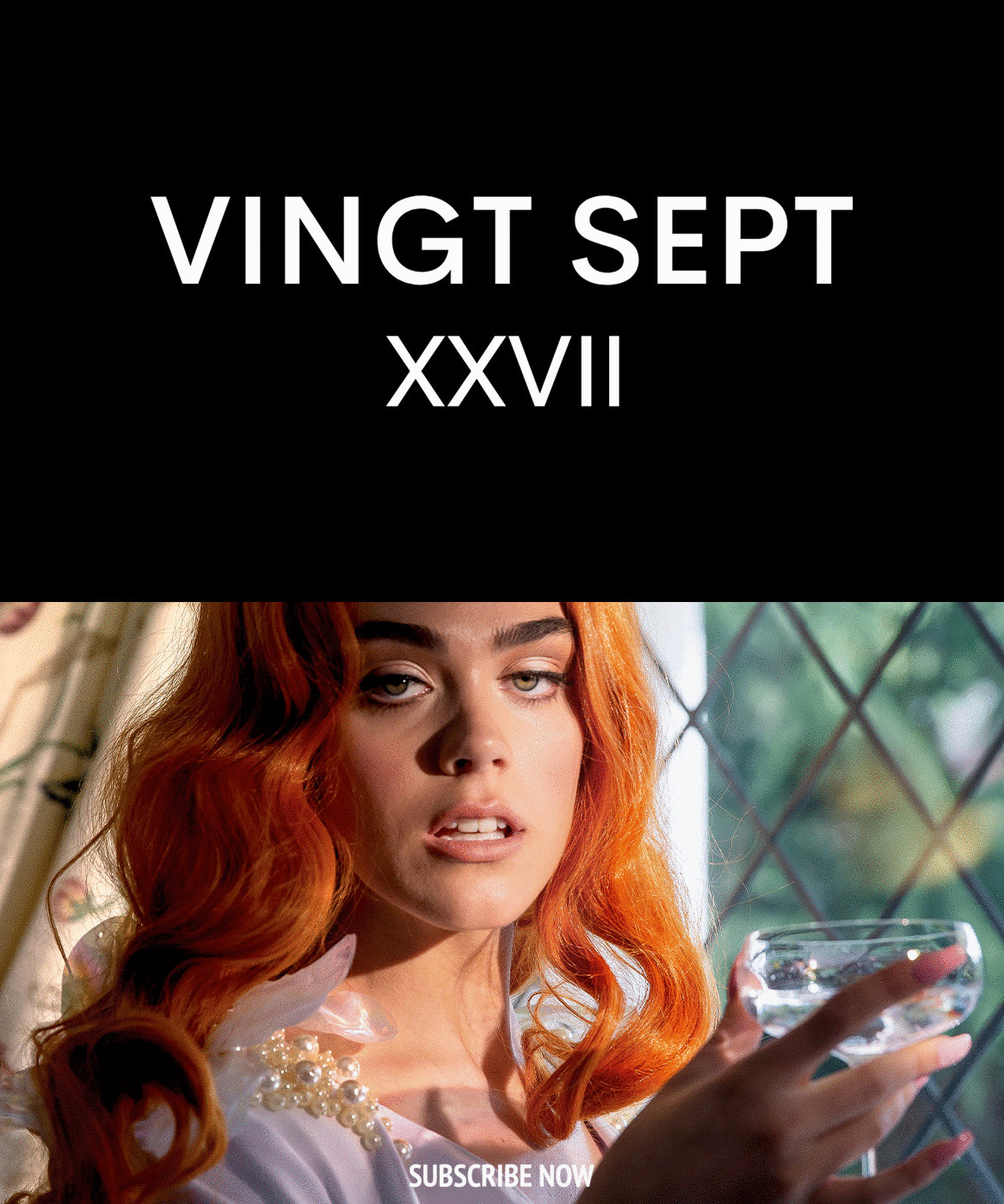

There is something quietly disarming about speaking to Sarah Yarkin. On screen, as Rhonda in School Spirits, she is composed, sharp edged, almost immovable. Off screen, she is animated, self aware and radically honest about fear, ambition and the strange intimacy of being perceived. What emerges in conversation is not just an actor promoting a new season, but an artist in the middle of recalibration. Four years into inhabiting the same character, she speaks about growth as something symbiotic, about genre as a vehicle for emotional truth rather than spectacle, and about the courage required to protect one’s peace while pursuing the work that terrifies you. For Yarkin, the supernatural is never really about ghosts. It is about vulnerability, authorship and learning to trust that you are already enough.
You’ve been living with Rhonda for a while now. Who were you when you first met her on the page, and who are you now?
It’s so crazy. That was summer 2022 when I booked the show. I was living in LA and I genuinely don’t think I would recognize my life now, or the person I was. I was dating only men, living in LA with a mostly hetero male friend group, depressed in my apartment, dreaming of living in New York one day where my family’s originally from.
I remember getting the audition and thinking, oh wow, finally. I’ve always wanted to do something sort of period. I felt like I would love to play someone from another time. And this felt realistic, like something I could actually book.
I got the callback after I had already come to New York for a guy, ironically. We broke up the next day. I had a Zoom callback for the show. That night, at 10pm, on a first date with another guy, my agent called and told me I booked it. A month later I was in Vancouver, questioning my queerness and so much about my personal life.
The things I was thinking about and struggling with then feel like a child now. I was an adult, and I still am, but that was four years ago. Each season I come back to Rhonda, there are elements of my own life that inevitably bleed into her. There’s this symbiotic relationship between who she is and who I am. It’s strange stepping back into the same outfit each year, but it’s exciting too. What can I bring to her now, from where I am in my life?
How has Rhonda evolved emotionally from season one to season three, and how have you evolved as well?
She has this huge arc toward openness and vulnerability. In season one she’s so closed, sarcastic, defensive. She barely has the energy to raise her hand. She’s like, get out of my face.
Over the seasons, she moves toward trusting people and letting Quinn in. She says, I was putting on an act. I’m scared. That would have never happened in season one.
For me, I’ve evolved in learning to trust myself. There was a time where I felt like I had to prove something constantly. Now I feel more centered. I know if I do the work, I’ll be fine.

What part of you is nothing like Rhonda at all?
I’m much more expressive. I love to laugh. I love talking to everyone. I have a lot of energy. Playing someone who’s been trapped for 60 years is a very different wavelength.
I remember in the first episode, we’re in a circle and I shot my hand up. The director was like, no. Rhonda wouldn’t raise her hand like that. She would maybe lift a finger. I realized I had to tamp down my own energy. She’s cooler. Her eyes don’t get that big. I had to lower everything.
Rhonda balances sharpness with emotional depth. How do you keep her grounded in a supernatural world?
I’m not really a fantasy person. I didn’t read fantasy growing up. I never read Harry Potter, I’ve never seen Lord of the Rings. So when I approach genre, I can’t think about it in terms of ghosts or plot mechanics.
I have to distill it down to something emotionally truthful. What does it feel like to be trapped? What does trauma feel like? If I can connect to that on a molecular level, then it becomes believable. If I’m just thinking about the supernatural plot, that’s not going to make great acting.
Horror often externalizes internal fear. What have you learned about yourself through the fears you’ve had to embody on screen?
I learned how much pressure I put on myself. On Texas Chainsaw, I was younger and I cared so much about the IP and doing it justice that I drove myself crazy. We shot in Bulgaria during the first summer of COVID. The production was chaotic. Directors were fired. It was a mess.
I stayed in this heightened state for weeks. I had panic attacks. I didn’t trust that I could just show up and perform. Even though I got the role, I still felt like I had to prove I was good.
As I’ve gotten older, I’ve learned that if I do my homework ahead of time, I can let it go. I don’t have to live in anxiety between scenes. I have to believe that when they call action, I’ll get there.

You’re not just acting, you’re writing, producing and making music. When did you realize you didn’t want to wait for permission to create?
In college they kept telling us, make your own work, don’t wait. I didn’t listen. I thought I would just get jobs.
I’m so grateful for this show and any role I’ve had. But acting doesn’t always scratch the itch of my own creativity, my own words, the conversations I want to have. You don’t get control over that as an actor.
Recently I produced and starred in a short with a close friend who wrote and directed it. That experience demystified the process. It showed me I don’t have to wait for someone else to give me permission. I can build something with people who share the same vision.
After working in both large studio projects and more intimate productions, how do you navigate the balance between business and artistry?
Someone once told me, only pick a project if it satisfies one of three things. It moves the needle in your career, it’s for money, or it’s a passion project.
Sometimes you get two. Rarely all three. But you cannot say yes if it satisfies none. That framework helps me think clearly. I have to ask myself, do I love this enough to leave my life for a month? To take my dogs and my partner? If I’m not excited about it, I shouldn’t do it.
When your own music appears in a project you’re acting in, does that feel more vulnerable than performing someone else’s words?
It’s terrifying. Singing my own words is probably the most vulnerable thing I can do. When I’m acting, there’s protection. I didn’t write those lines. If someone doesn’t like them, that’s not fully on me.
With music or writing, it’s just me. It feels like my thoughts, my intelligence, my inner world are exposed. That’s much scarier than someone critiquing a character.
You’ve spoken openly about being queer. Has that shaped the stories you’re drawn to, or more how you move through the industry?
I genuinely didn’t understand my own sexuality until I was 28. I sometimes wonder if that would have shifted if I had seen queer relationships normalized on screen when I was younger.
Now I feel excited to show relationships that aren’t othered. Not stories about coming out, but just about existing. I get messages from teenagers cheering on Quinn and Rhonda. I think about how I didn’t have that, and it means a lot to me that they do.

At what point did environmental anxiety become personal rather than abstract for you?
During the wildfires in 2020. I had a breakdown. It felt like, what’s the point of worrying about my acting career if the world is burning?
My family has always been active around climate issues, but that moment made it personal. Working with Plastic Pollution Coalition helped me feel less helpless. I can’t change policy, but I can focus on reducing single use plastic and using my platform.
What does New York give you creatively that nowhere else does?
I’ve talked about this for years. I was in LA for over a decade and it never felt like home. I’m a walker. My mom’s a New Yorker. We’re walkers. In LA I used to walk everywhere in Los Feliz.
When we booked School Spirits and I met Nick at the airport, he texted his friend and said, “Oh my God, it’s walking girl.” He had recognized me from seeing me walk around for years.
New York is made for walking. I can walk to the park and no one knows my name. I can just be an anonymous person in a huge city. There are so many people here living lives that are not revolved around deadline.com. In LA it feels much more in your face. Here, I can just exist.
When you think about the next five years, what are you trying to protect in your work, and what are you willing to break?
I want to protect my peace. I don’t want to appease everyone or stay quiet to avoid being labeled difficult. I want to stand up for what I know is right.
And I’m willing to break comfort. The things that scare me, singing, writing, those are the things I need to pursue. If it terrifies me, there’s probably something real there.
I ask this to everyone I interview. If you could choose one question you wish an interviewer would ask you, what would it be? And then answer it.
Oh God. That’s so hard. Now I have to do your job.
I was asked this once before, and I liked the question so much. It was, if you could be in any show that’s on right now, what show would you want to be in?
This year I have a very strong answer. I got really into The Secret Lives of Mormon Wives. It’s the best show I’ve ever seen in my life. I watched it twice. I made my girlfriend watch it. I told my mom to watch it. I’m basically propaganda for it.
Everyone else always says something cool, like Succession or something prestigious. I want to be on The Secret Lives of Mormon Wives. I want to go to Swig and make a dirty soda with them. I would do anything for one day on that show.
School Spirits Season 3 is out now
Photographer Jonny Marlow
Words by Philipp Raheem


Comments