


Heartbreak often leads to great success: How Primetime screenwriter Ajon Singh flipped the script with the help of Robert Pattinson

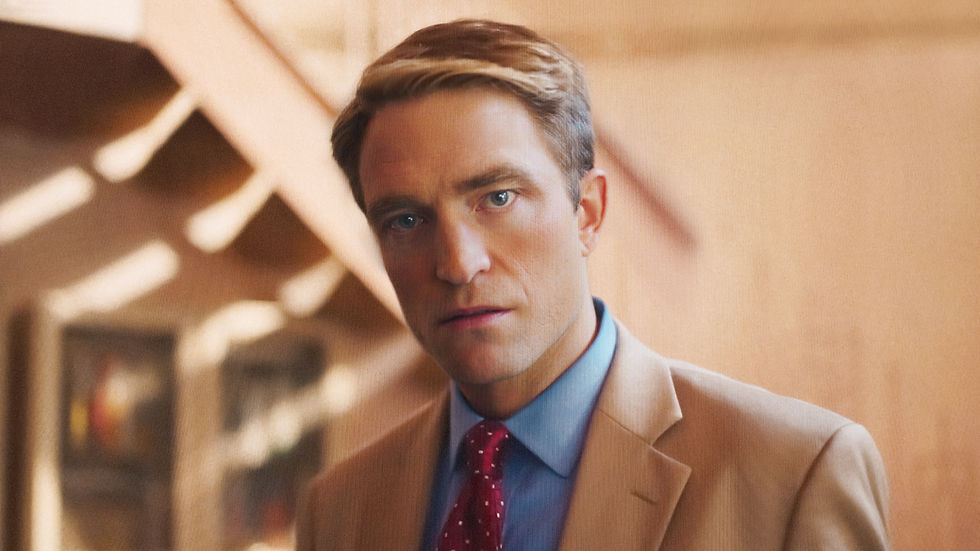
Screenwriter Ajon Singh spent weeks researching a script inspired by the renowned 2007 Esquire article ‘Tonight on Dateline This Man Will Die’, a story he always believed belonged on the big screen. Hollywood executives instantly rejected his first pitches, but one day he received a phone call that would change the trajectory of his screenwriting career. Robert Pattinson and his producing partner had got hold of the script and wanted to meet him. Their instinct was right: fast forward two years and Singh’s labour-of-love script has just been nominated for Best Adapted Screenplay at the Gotham Awards. Exploring Chris Hansen’s quest to do good while entertaining viewers, Primetime premiered at the London Film Festival and now opens in cinemas nationwide.
Vingt Sept spoke to Singh about his creative process and vision for the film, happy accidents in filmmaking, and how he convinced a reluctant Pattinson to take on the role of Chris Hansen.

Tell us how your obsession with To Catch a Predator first started.
In our household there was always something on the television. Back in the daytime you would get things like Jerry Springer or Oprah and then by nighttime you would have ABC 20/20, which was an investigative show, or Dateline NBC, which is where To Catch a Predator would come on. I was so infatuated. I think the same parts of my brain that were infatuated by Elmo were infatuated with this. The colours were so vivid, and the content was so intense. It was really overwhelming and I just soaked it all up. Of course I was really young, so I was unable to really grasp what the show was about. Chris Hansen walks out, he says a funny quip, and these guys are just standing there with a silly look on their face. To me, it was just a really funny prank show. Fast forward to all those years later, it sort of sunk in exactly what the gravity of the situation was. When I met the producer and we started talking about the article ‘Tonight on Dateline This Man Will Die’, I realised that it was such an essential part of my childhood. In fact, I told them it was my favourite show of the aughts, and I even used to memorise the chat logs that these guys would have on the show, not fully understanding what they were even about.
After all your intense research about the topic, you wrote the initial script in just two weeks. What was that process like?
That is my process generally. I like to do the ugly stuff up front, the outlining and research. I figure out the set pieces, and the pacing first. Once that outline is done, the first draft is pure flow, pure instinct, pure spirit. It's like ‘the marshmallow test’ for writing. If you do outline and research for such a long time, you finally get the reward. It's where I can hear the voices and the acoustics in the room. I try to channel all this as if I'm in the audience myself. Of course, when you then go back and read the draft, you realise 'oh my god, what have I done’. Then the editing begins, another process that is particularly gruelling for most writers, I imagine.
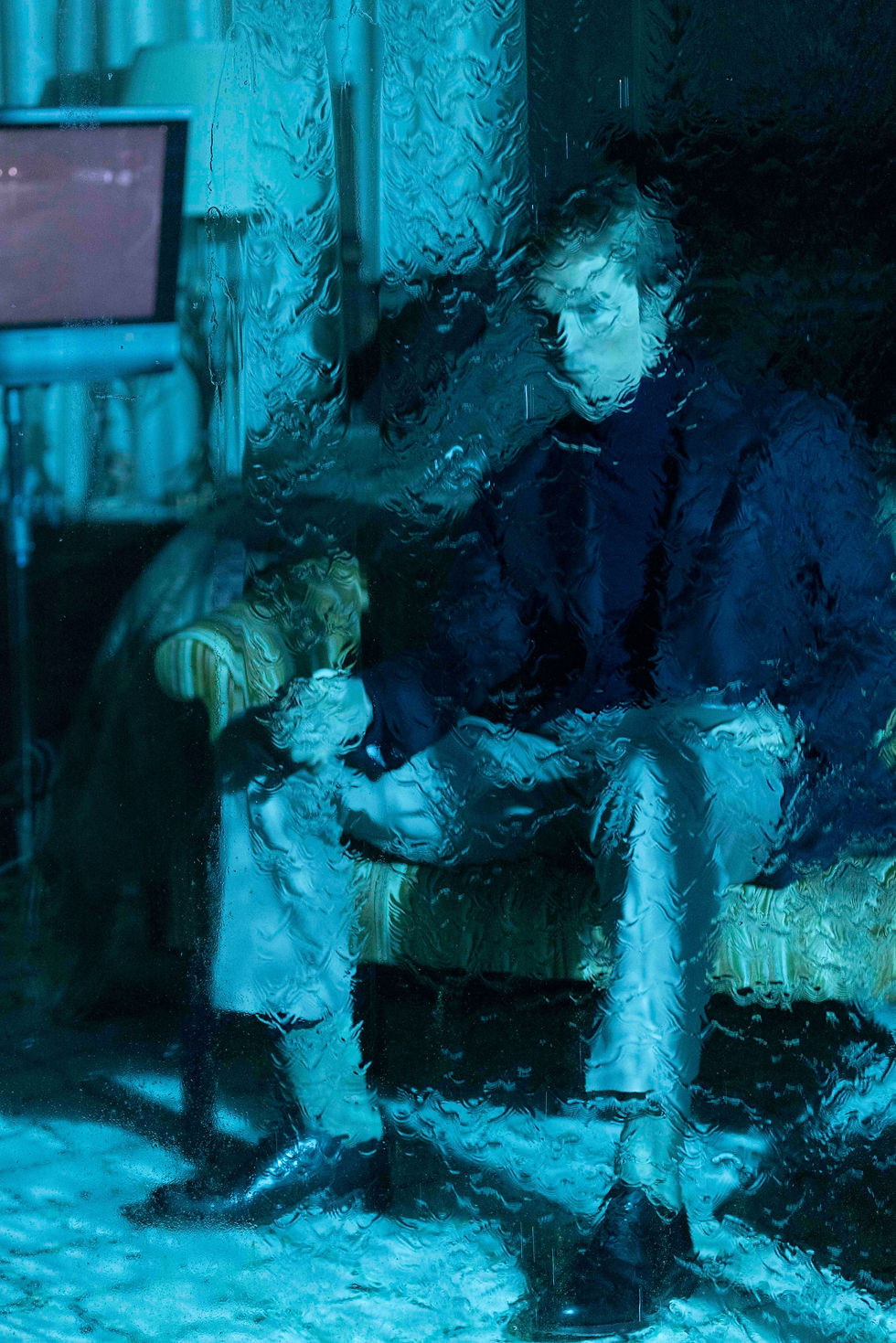
Robert Pattinson approached you to turn your script into a film. Can you tell me what your first conversations were about?
When Rob and I first spoke, it was me, Rob and Brighton McCloskey, his producing partner. They both instantly got the film I wrote and understood it in a way that nobody in the business had. The industry was just passing on the script without even reading it. It was a heartbreaking experience. So, when Rob and I first started talking, he spoke about his history with the show. Like me, he grew up watching it; in fact, he was just about to start filming Twilight when the show was still on television.
There were a lot of things that he just fully understood about the script. He also knew Chris Hansen well - not personally - but the character that Chris creates in the show, and also the meme version of him that he had created for himself over the years. He had self-satirised. But then also Chris Hansen, the journalist. We were both aware of the many lives that this man had lived, and that was a big part of the conversation.
Did these conversations influence the final version of the script?
When Rob originally came on, he only wanted to produce the project. It took some courting for me and Lance (Oppenheim, the director) to get him to agree to act in the movie. It all happened over this one fateful dinner where we were out late. By the end of the night, Rob was reciting lines from the script, and he kept talking about running around the local reservoir, listening to Chris Hansen's podcast. Throughout the night, I would go to the bathroom - well, I pretended to go to the bathroom - to take notes of the things he was saying. And what he was saying was not at odds with what I had written. In fact, it was adding beautiful colour. Lance and Rob started to talk about Chris Hansen like he's an angel of punishment. He descends down the stairs, like he does in the movie. He has this sort of mystical quality to him.
From there we started to talk about this idea of a metamorphosis. At the beginning of the movie, he's a man chasing this petty dream of ratings and primetime. By the end of the film, he's a man who's dedicated himself to the conquest, to conquering evil itself. He goes from plucky journalist to superhero. Those were the kind of conversations we were having that night, it was just like a dream.

The film and its characters tread the line between truth and fiction. What fictional elements did you deliberately add to shape the plot, and how did you approach this in your character study?
After my extensive research process, I had to go through checks and balances. You can’t just freely fictionalise things; you have to adhere to the legal bodies that exist in the filmmaking process. We did dramatise, you know, it's a film.
We're not making a photorealistic mimicry of Chris Hansen. We wanted to do our own fever-dream take on the entire experience. We created an extremely dramatised, dreamlike version of things that were real. At the same time, there's a lot of true story stuff that we omitted from the film and that's also a big decision. You make these decisions to tell a fair and balanced story, but also one that is extremely gripping and aligned with the style choices you have in mind.
The film has been described as a media collage, and it almost feels like being stuck inside the static of a TV. Was this something you had already envisioned when you were writing it, or did it come later?
Yes, that was always part of the conversation. In fact, I wonder if that was one of the first conversations we ever had. One of the reasons that I was so compelled by Lance when he and I first met was that one, he was from the world of documentary, but two, I thought he could bring something special to the surveillance aspects of this film. A lot of times we're hopping between formats. You have the surveillance camera, which is the DV (Digital Video) footage. You have the tube camera, which is like the real broadcast camera from the time. We're using a bunch of different formats to make the film feel like it is shifting between dimensions or universes. It's in an effort to make the film feel really kinetic. We looked at films like Natural Born Killers (by Quentin Tarantino) as inspiration for that.
There was a line in my script that from this point on, the film becomes microwaved. Weirdly, one of the tube cameras literally started to internally melt during filming because it was so old. It ended up adding this incredible effect to the footage, the microwaved, sort of syrupy feeling that you get in the third act, by pure chance. It was a weird, but amazing coincidence. It totally aligned with the spirit of the script.

Is there anything about the film you feel like you haven't been able to share yet that is personally important to you?
That's a great question. Once we end the interview I will probably think of loads more things, but one of the things that's really important to me - and it's not the most flashy - is how much kindness the set ran with. I believe that Hollywood has a tendency to sometimes lean towards cruelty. But this film truly led with kindness on set. There was a lot of enthusiasm. It came from a place of joy and fun. And obviously, at times, you get headaches and you get stressed out, but most of the time, I believe people were gentle and kind to each other. As someone who's very critical of this business, that is something that gives me a lot of hope for my future in the industry.
Primetime is out now in Cinemas
Interview by Cailin Klohk


Comments