


Remmie Milner On Silo, Motherhood & Learning To Let Go Of Perfection


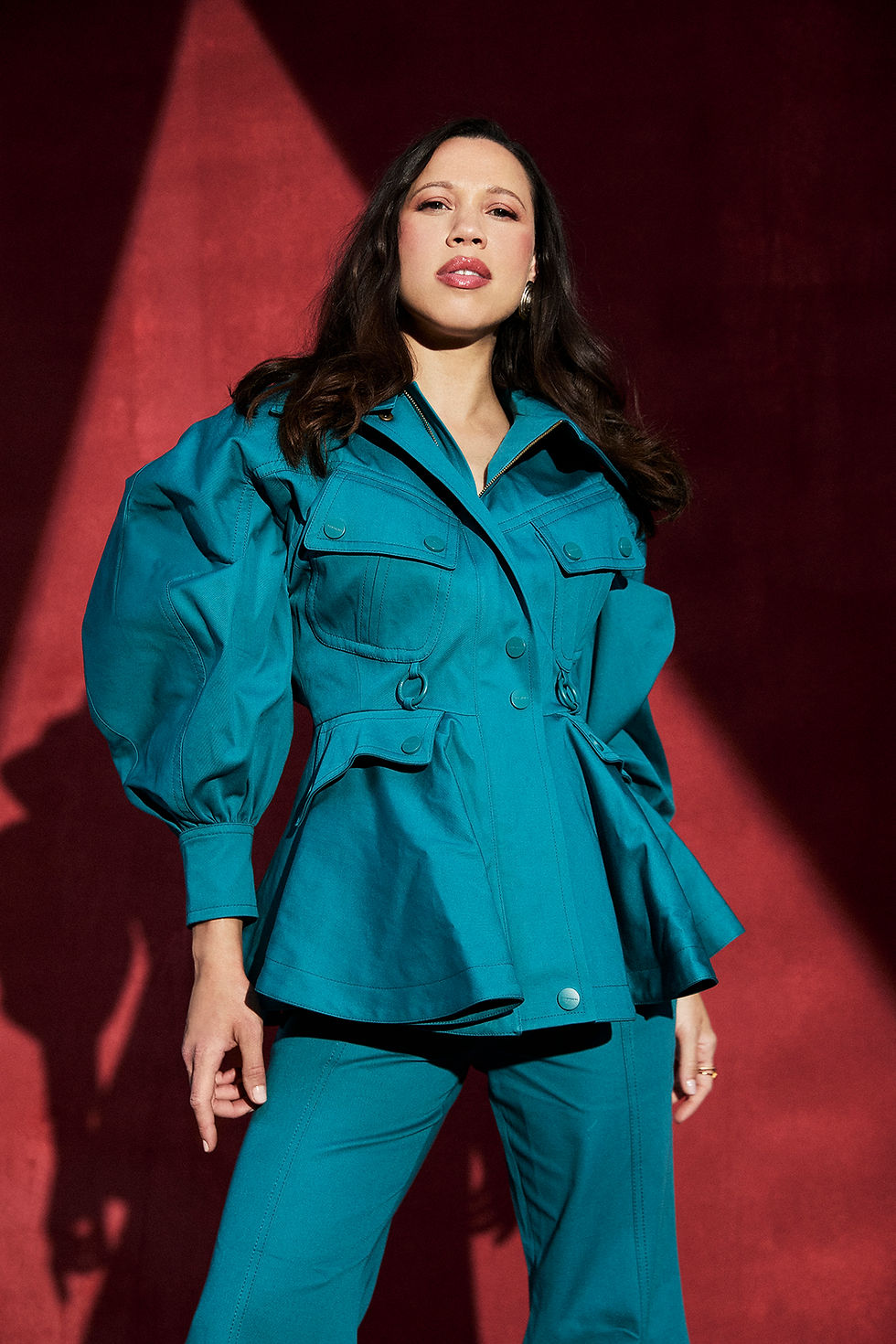
By the time I speak with Remmie Milner, I'm running on four hours of sleep.
It's the reality of juggling clients across multiple time zones, and as I apologise for my slightly sleep-deprived state, she laughs and immediately relates. As the mother of a toddler and another child on the way, early mornings and interrupted sleep have become part of her own routine. It's a small moment, but one that quietly sets the tone for the conversation that follows.
Milner may be preparing for the return of Apple TV+'s global sci-fi phenomenon Silo, where she plays fan-favourite Shirley Campbell, but our conversation quickly moves beyond the confines of the silo itself. Instead, we find ourselves discussing perfectionism, uncertainty, psychology, and the strange pressure many of us place on ourselves to have life figured out.

What emerges is not a conversation about success in the traditional sense. There are no grand declarations about career milestones or industry ambitions. Instead, Milner speaks thoughtfully about slowing down, embracing vulnerability and becoming comfortable with not always having the answers.
It's perhaps unsurprising. Across two seasons of Silo, audiences have watched Shirley navigate impossible circumstances with determination and resilience. Yet the woman behind the character seems far more interested in curiosity than certainty.
As Silo prepares to return for its highly anticipated third season, Vingt Sept sat down with Milner to discuss the evolution of Shirley, the lessons acting has taught her and why she believes some of life's most important discoveries happen when we stop trying to control everything.

Silo has built a hugely dedicated fanbase around the world. What has the experience of being part of that journey been like for you?
It truly is global. I have people message me from Brazil, America, all over the place. What I think is great about Silo is that even though it's sci-fi, people connect with it for the heart and the stories of the characters.
My mum isn't really a sci-fi person, but she absolutely loves Silo. The first season had that murder mystery element; the second became more about rebellion and discovering other silos. There's something for everyone to latch onto. It's been amazing watching people become so invested in it all.
Returning to Shirley season after season, what have you enjoyed most about growing alongside her?
Each season has such a different feel. We meet Shirley carrying a lot of anger and frustration, and that really comes to the surface in Season 2 when she's leading the rebellion and demanding answers. What's exciting about Season 3 is that things shift again, and we get to see another side of her.
It's always a joy getting the scripts and figuring out what's changed, what her turning point is and how that develops over ten episodes. As an actor, that's exactly what you want. You don't want to be doing the same thing all the time.

Without giving too much away, what were you most excited for audiences to discover in Season 3?
One of the most exciting things for me was arriving on set and meeting this incredible new cast that joins the story. New worlds and new perspectives are coming into play. Without giving too much away, seeing how all those puzzle pieces begin to fit together is going to be really exciting for audiences.
Looking back on your career so far, what are you most proud of?
I spent years working in theatre before moving back into television. One of the projects I'm most proud of is Save Me. Joining that family was incredible. Lennie James had created this environment where everyone trusted each other. There was so much collaboration and creativity. It felt organic and alive. That's definitely one of the experiences that stands out when I look back.
Was there a moment when acting stopped feeling like something you did and started feeling like something that was truly part of who you are?
I went to the BRIT School from the age of fourteen, so acting was part of my life very early on. But I think it really sank in when I started leading plays and performing regularly in theatre. Theatre is hard work. You're constantly entering new spaces and trying to connect with a live audience every night. That challenge made me realise this wasn't just something I enjoyed; it was something I genuinely wanted to dedicate myself to.

Throughout our conversation, Milner returns repeatedly to the idea of reflection. Not the industry kind, but the personal kind. The way stories can unexpectedly reveal something about ourselves. Has acting taught you anything about yourself?
All the time. Sometimes you'll be working on a story and realise it's reflecting something happening in your own life, or something you've experienced in the past. It can help you understand those emotions differently. Acting has this incredible way of holding a mirror up to your life. It allows you to reconnect with things and sometimes discover something completely new about yourself.
How do you tend to navigate periods of uncertainty or change in your life?
I talk. I've always been a talker. When I was younger, I would go inward and try to carry everything myself, but now I've learned to open up and not be afraid of not having all the answers. Uncertainty needs to be looked at properly. It needs attention. Whether you approach it cautiously or head-on, I think the important thing is not to ignore it.
If you could speak to your younger self, what would you want to tell her?
I'd tell her there's no rush. You don't have to do everything at the same time, and you don't have to be perfect. I think I had a really strong attachment to perfectionism when I was younger, and that's often about control and not wanting to appear vulnerable. The irony is that some of the most beautiful moments come from allowing yourself to be vulnerable. So I'd tell her to relax a little more and not be afraid of not having all the answers.
It's a sentiment that appears throughout our conversation. Again and again, Milner circles back to the idea that growth isn't about certainty. It's about allowing yourself the space to evolve. What does success mean to you now, and has that definition changed over time?
Absolutely. When I was younger, success felt like constantly reaching for the next thing. You get one job and immediately start thinking about the next one. There's a lot of value in ambition, but I think there comes a point where you need to sit with things for a little longer and appreciate them.
Having a toddler has changed that for me. It forces you to slow down and be present in a completely different way. Success now is about finding those smaller moments and creating space for them. It's still about happiness, but it's also about being fully present in your life.

If you could spend a year pursuing something purely out of curiosity, what would it be?
I've always been a science geek at heart. When I was younger, I was torn between acting and studying psychology or psychiatry. Human behaviour absolutely fascinates me. If you gave me a year now, I'd happily go down that route and immerse myself in it. I find people endlessly interesting.
Looking ahead, what kind of stories, experiences or challenges are you hoping to invite into your life next?
I've been with Silo since 2021, and it's been such an incredible experience. It's become a real family. But because of that, I'd love to do something completely different next. Maybe a period piece, or something gritty and distinctly British. At the same time, I've really enjoyed the action side of Silo. That's challenged me in a very satisfying way, so I'd love to explore more of that too.
What is something you're still learning about yourself?
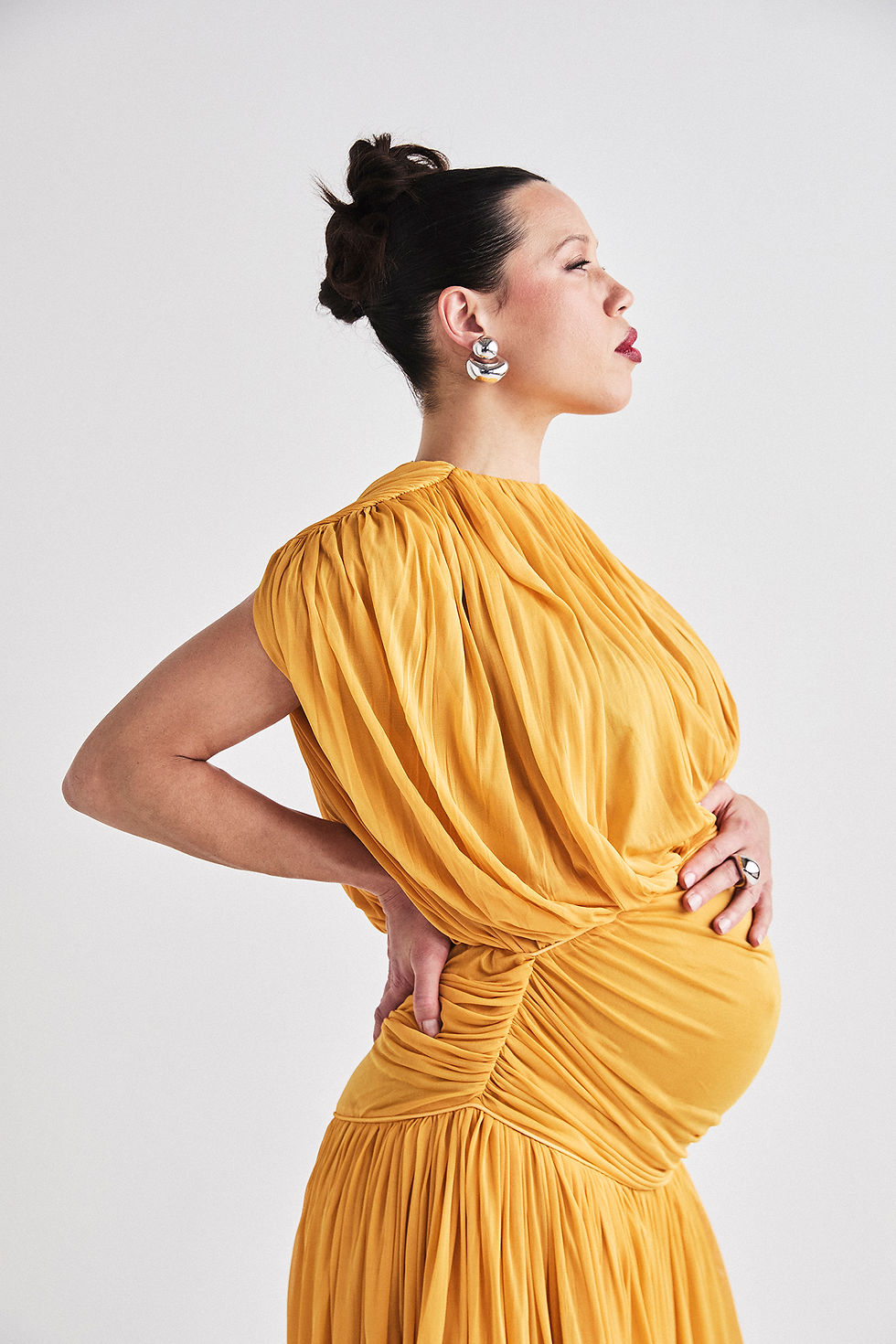
Becoming a mother has made me ask a lot of questions about who I am and who I'm becoming. I'm also about to have another baby, so that's another huge life change. I think I'm still learning how all these different parts of myself fit together. What I do know is that I want to keep growing, keep learning and keep exploring. Acting, filmmaking and storytelling are beautiful ways of doing that because they allow you to channel your curiosity into something meaningful.
Who is your favourite person to work with on set?
Rebecca Ferguson. She's one of my closest friends on the show, and she's incredibly inspiring. She's passionate about every detail and leaves nothing unexplored. She investigates everything to make sure it's the best it can possibly be. Working alongside someone like that is a real gift.
I always like to end interviews with the same question. If you could ask yourself one question that you wish more interviewers would ask, what would it be, and how would you answer it?
I think it would be something about filming Silo over these past seasons and how we work together as a cast to make this world feel real.
People see the finished show and all the twists and turns, but what they don't necessarily see is how much collaboration goes into making those moments work. Sometimes you're trying to make sense of a scene that has consequences much later down the line, and you have to trust that all the pieces are eventually going to fit together.

There have been so many moments where we've all been sitting together trying to figure out how something should work, whether it's the action, the emotional beats or understanding how a decision in one episode might affect something much later. It's incredibly collaborative.
I love that side of it because it makes you feel deeply connected to the story and to the people you're working with. You build trust in each other, and you trust that together you're creating something that will ultimately make sense for the audience. That's really fulfilling.
Silo is out now on Apple TV+
Photographer David Reiss
Styling Harriet Nicolson
MUA Min Sandhu
Hair by Liam Curran
Words by Philipp Raheem


Comments