


CELINE SS27: MICHAEL RIDER MAKES A CASE FOR EMOTIONAL DRESSING


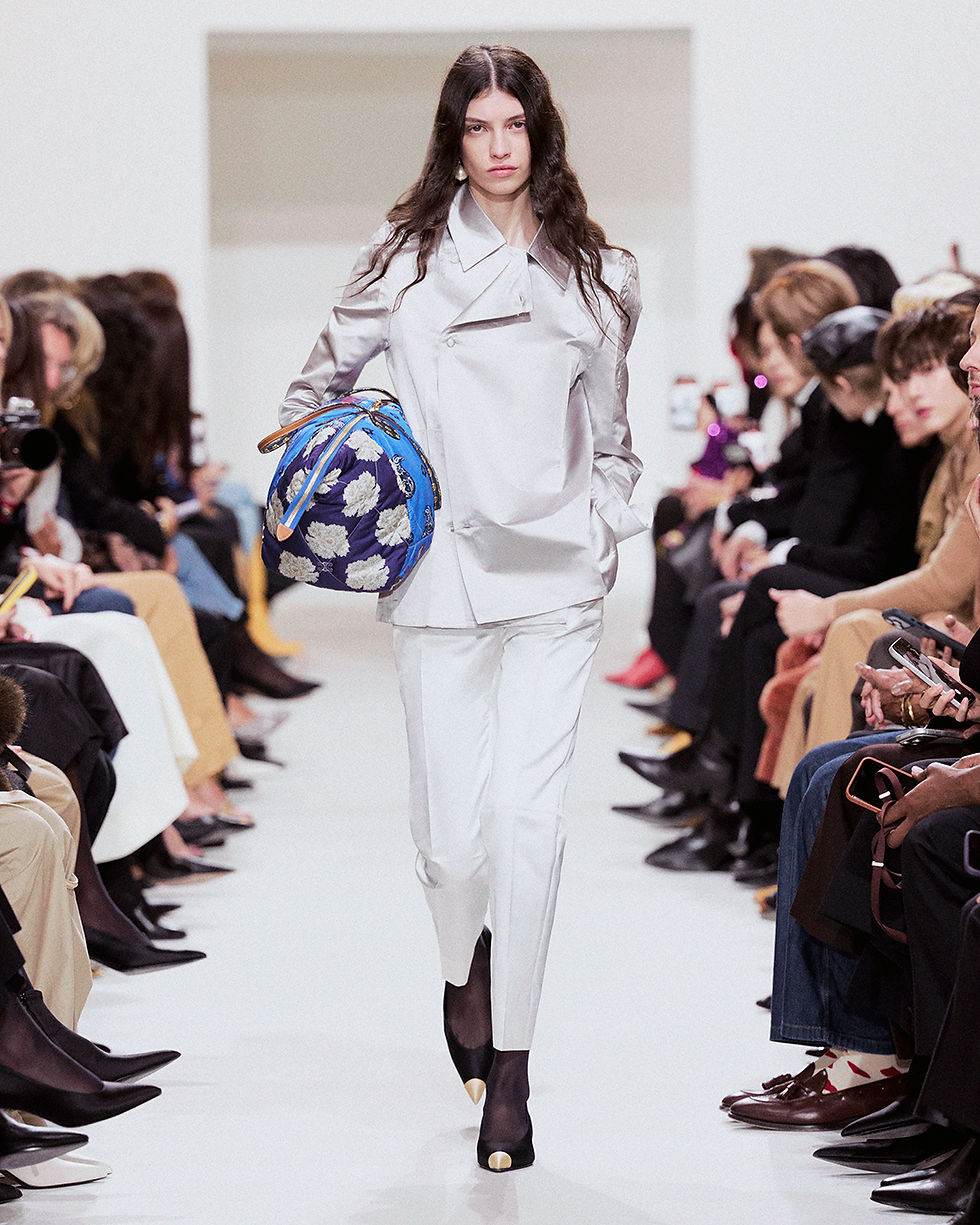
For Spring/Summer 2027, Michael Rider explored the pleasures and contradictions of getting dressed, bringing colour, character and a renewed sense of spontaneity to CELINE.
There's something refreshingly liberating about Michael Rider's approach to CELINE. Where luxury fashion has spent recent seasons negotiating the boundaries of minimalism, restraint and understated wealth, the American designer appears increasingly interested in something less predictable: the emotional connection between people and their clothes.
For Spring/Summer 2027, presented at the Archives Nationales during Paris Fashion Week, Rider introduced a 71-look collection that moved between elegance and eccentricity, exploring the familiar desire to look polished while occasionally throwing caution to the wind.

His accompanying show notes read almost like a stream of consciousness. References to belonging, rebellion, desire, frustration and memories of falling in love with fashion suggested a designer less concerned with prescribing a particular aesthetic than with acknowledging the different emotions that influence how people dress.
It was an interesting starting point for a house whose visual identity has undergone several transformations. Rider, who previously worked under Phoebe Philo at CELINE before joining Ralph Lauren, has been developing a language that draws upon the maison's heritage without becoming overly attached to any one chapter of its history.
For SS27, that approach translated into a wardrobe where classic pieces acquired a more expressive personality.
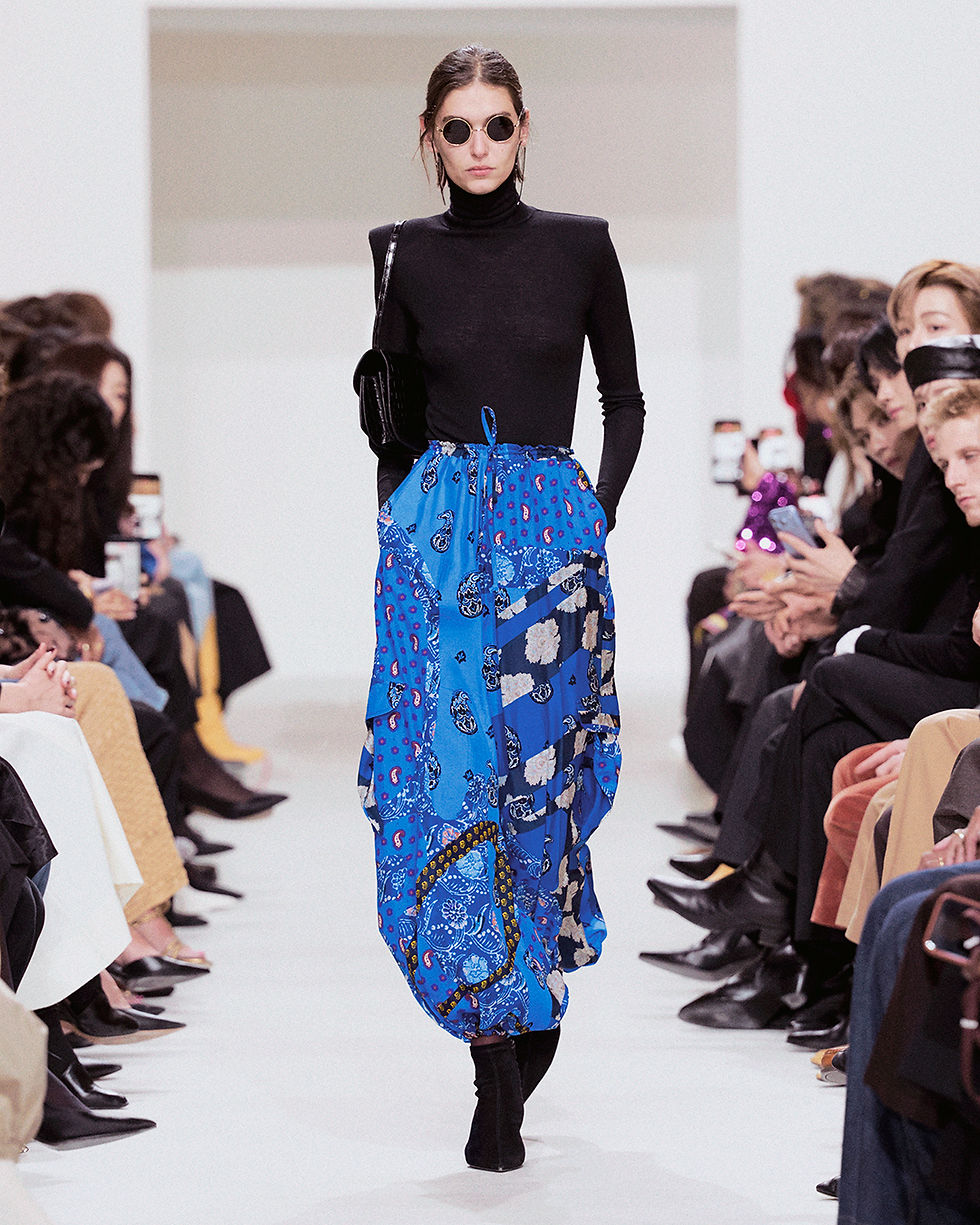
Tailoring remained a central component, with structured jackets and relaxed trousers introducing the kind of effortless polish that has become associated with Rider's work. Yet, the styling prevented these familiar combinations from feeling overly formal. Decorative jewellery, ribbons, statement accessories and unexpected colour pairings introduced individuality, suggesting that elegance need not be synonymous with restraint.
Colour played a particularly important role. Vivid reds, cobalt blue, fuchsia and saturated greens interrupted more conventional wardrobe tones, bringing energy to silhouettes that might otherwise have appeared relatively understated.
There was a confidence to these combinations, particularly when contrasting shades were brought together without attempting to soften their impact. The result was a collection that encouraged experimentation while retaining the practical foundations of everyday dressing.

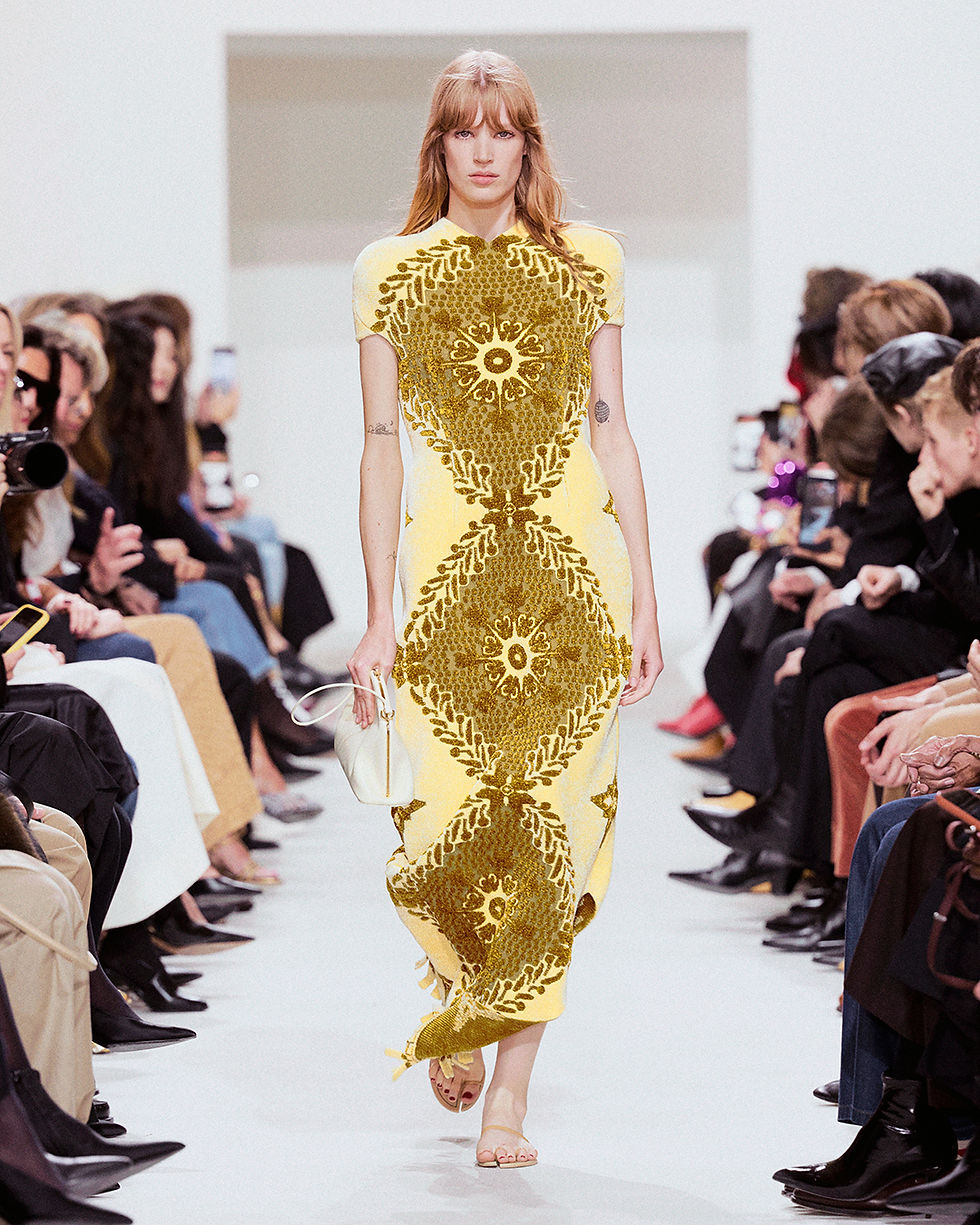
Elsewhere, fluid dresses, intricate embellishment and decorative outerwear introduced a more romantic dimension. Floral embroidery and bohemian-inspired prints sat alongside polished separates, while beaded garments offered a reminder that fashion's decorative qualities remain part of its appeal.
What made these contrasts work was the absence of an overly rigid formula. A tailored jacket could appear with an unexpected accessory, while an embellished piece could be incorporated into an otherwise straightforward ensemble. Rather than presenting glamour and practicality as competing ideas, Rider allowed them to coexist.
The proportions were equally important. Relaxed tailoring, fluid skirts and more defined dresses created variation throughout the collection, with subtle adjustments to familiar silhouettes giving them a different character.

There was also a welcome sense of ease. Even the more elaborate looks appeared designed to be worn rather than simply admired, reflecting Rider's interest in clothing that can become part of someone's life beyond the runway.
That distinction feels particularly relevant at a time when fashion is increasingly consumed through images, often divorced from the experience of actually wearing the garments.
Rider's collection suggested a return to the personal pleasures of dressing: finding an unexpected combination, rediscovering a favourite piece or choosing something extravagant simply because the occasion calls for it.
The soundtrack reinforced that sentiment, moving between Lesley Gore's You Don't Own Me and Britney Spears' Gimme More. Both songs, despite belonging to different generations, carried an unmistakable sense of attitude, complementing a collection concerned with independence and self-expression.
There was a certain nostalgia running through the presentation, although it never became a straightforward exercise in revisiting the past. Instead, Rider appeared interested in the moments that shape our relationship with fashion, whether through music, personal memories or the influence of the people around us.
Perhaps the most compelling aspect of SS27 was its refusal to define the CELINE wearer too narrowly. There was room for the minimalist, the maximalist, the romantic and the individual who might identify with all three depending on the day.
The collection did not attempt to resolve the contradictions of personal style. It embraced them.
As Rider continues to establish his vision for the French house, Spring/Summer 2027 demonstrated a growing confidence in his ability to balance CELINE's established codes with a more expressive interpretation of luxury.

There was polish, certainly, but also humour, spontaneity and an appreciation for the occasional excess.
Ultimately, the collection made a persuasive case for fashion as something more than an exercise in looking appropriately dressed. Clothes can offer reassurance, provoke curiosity, express confidence or simply reflect a particular mood.
For CELINE SS27, Rider reminded us that getting dressed should still leave room for a little excitement.
For more information, visit HERE


Comments